 Rustango
 Rustango documentation
Topic guides, tutorial, API reference, release notes, and recipes.
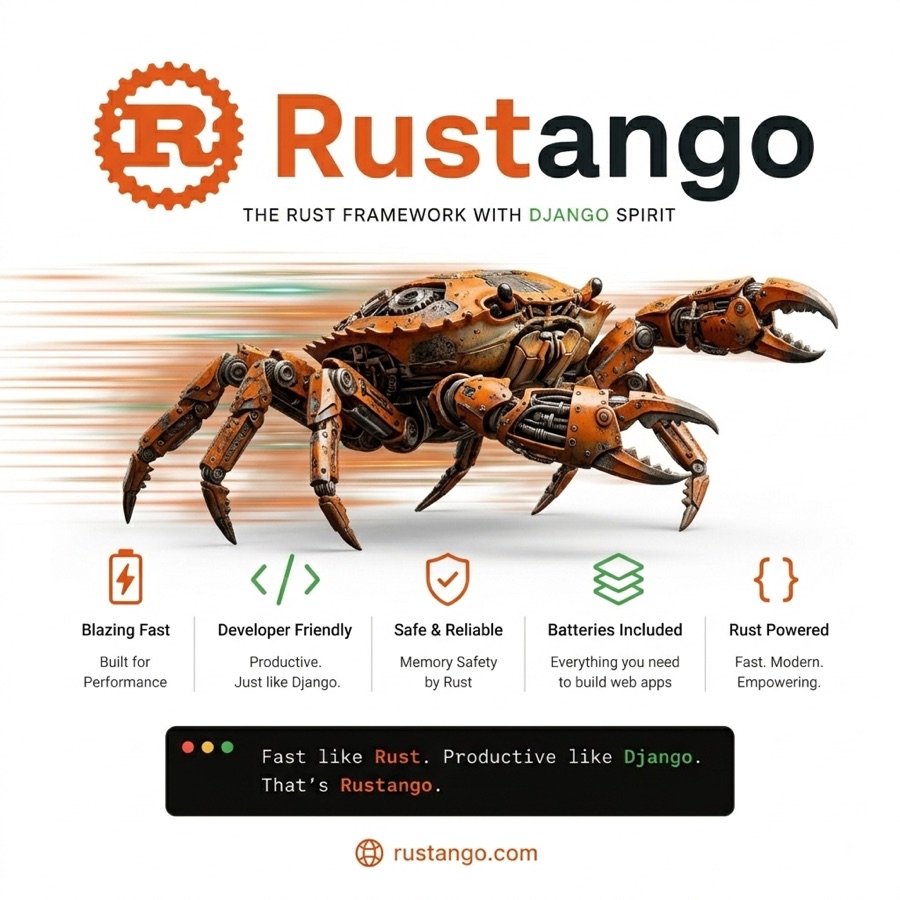
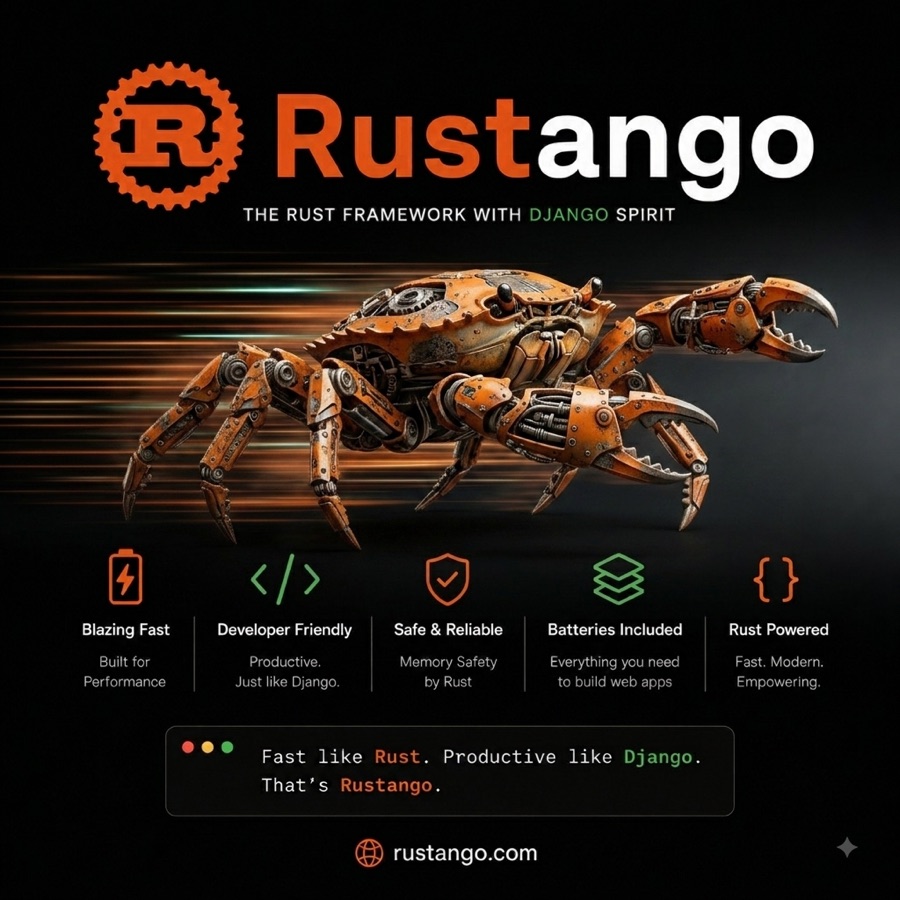
Django’s batteries, Rust’s guarantees.
Rustango is a batteries-included web framework for Rust — the productivity of Django or Rails, with the speed, memory safety, and single-binary deploy of Rust.
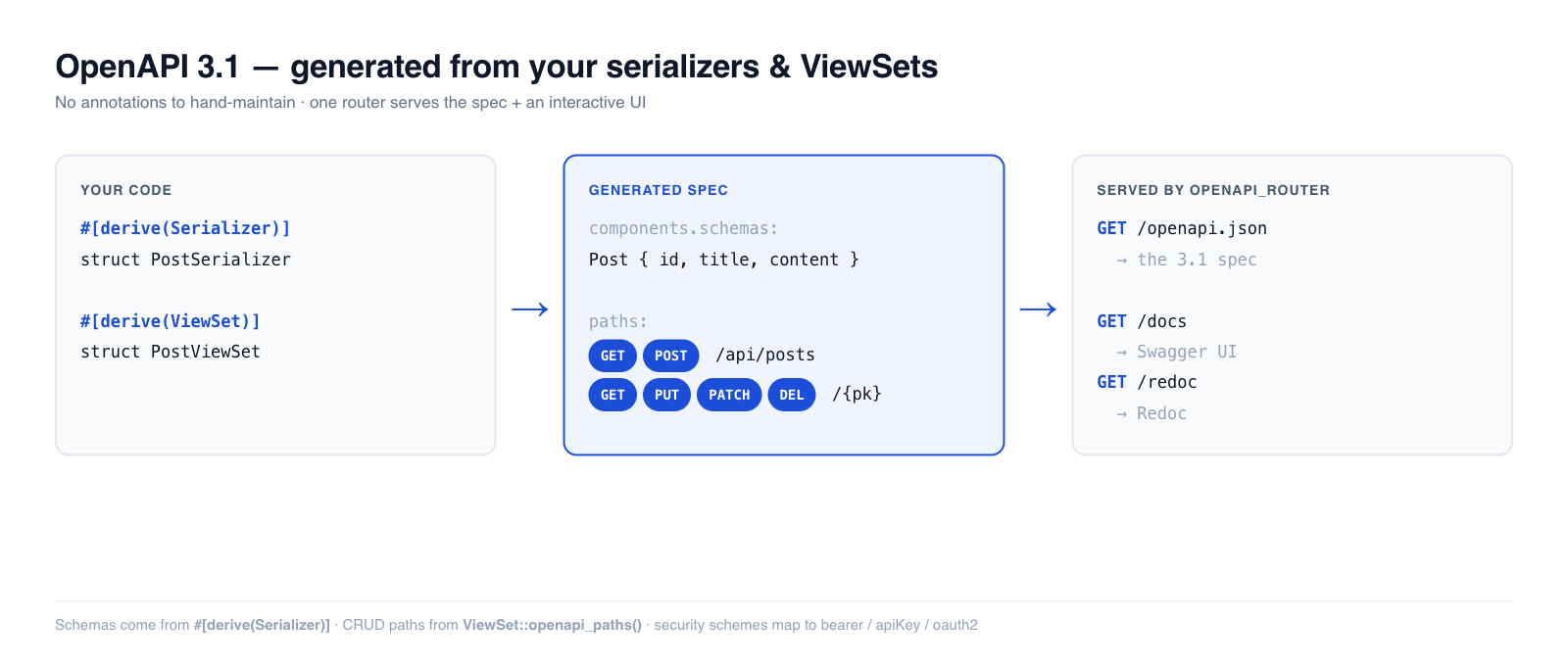
- Batteries included — ORM & migrations, admin, auth, REST + OpenAPI, templates, forms, background jobs, and i18n in one crate.
- Fast & safe by default — compiled, no garbage collector, memory-safe: your whole web layer runs at Rust speed.
- Runs on any database — one backend across Postgres, MySQL, and SQLite, with multi-tenancy built in.
- Ships as one binary — no runtime, no interpreter: build it, copy it, run it.
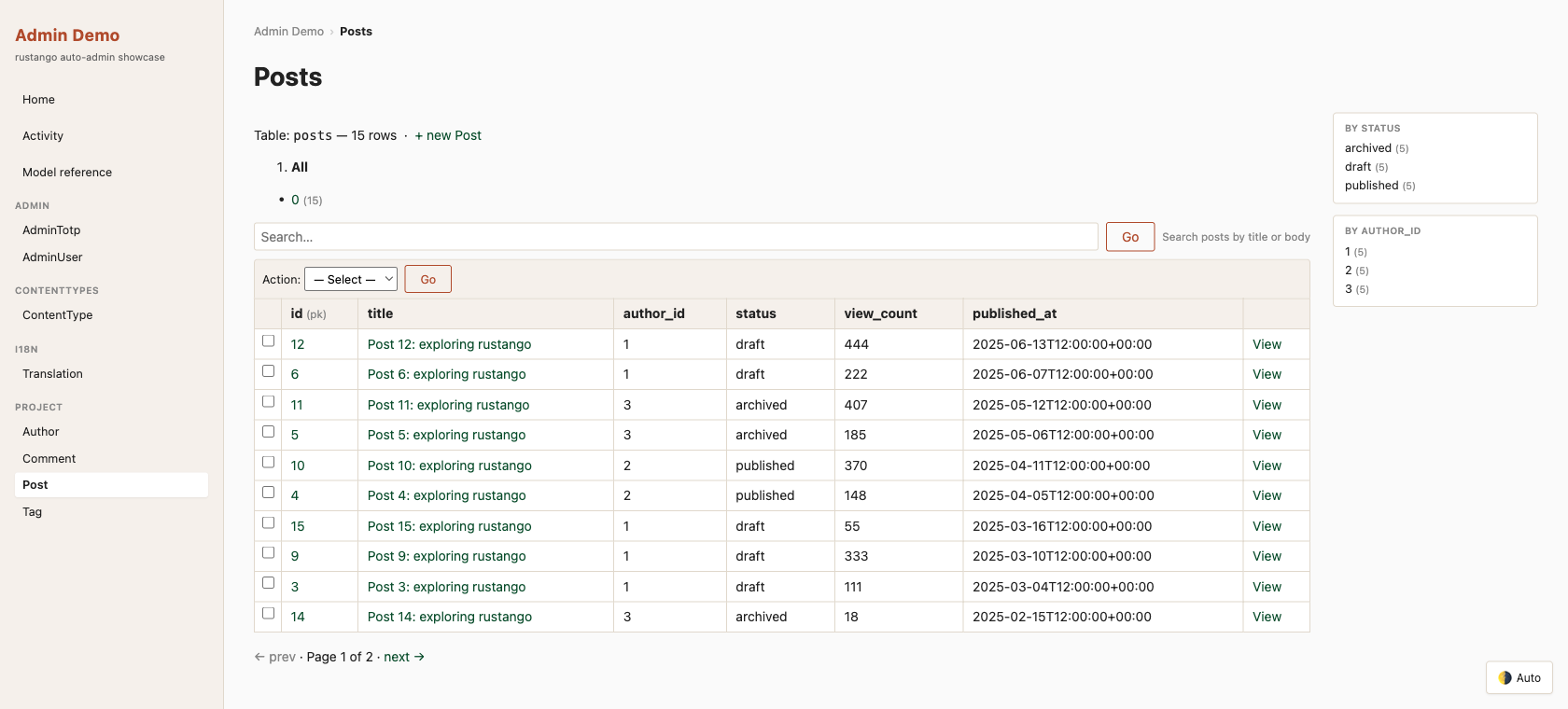
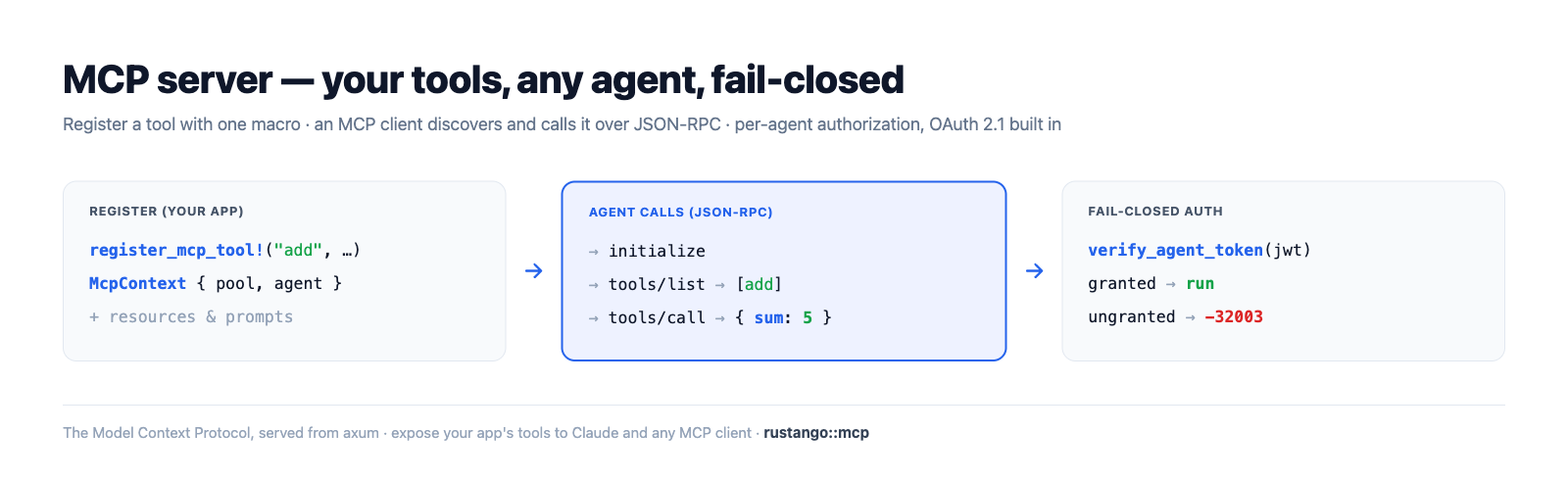
See it in action
In this version
Getting started
Getting started — Rustango framework documentation: guides, examples, and API reference.
Guides
Guides — Rustango framework documentation: guides, examples, and API reference.
Authentication
Authentication — Rustango framework documentation: guides, examples, and API reference.
Benchmarks
Benchmarks — Rustango framework documentation: guides, examples, and API reference.
Reference
Reference — Rustango framework documentation: guides, examples, and API reference.